
Enfield Resident Lookup Records
No single master roll powers an Enfield resident lookup. It works as a set of separate record checks. The assessed-property card shows an owner and the mailing address used on the card, but it cannot prove who is present at that address. Vital records answer an event question, and access follows each record's eligibility rules. A court index can name a party, a defendant, a case type, or a docket status. Probate, voter, and license files add a named role. Hartford County supplies court and archive context. For local land records, the Enfield Town Clerk route carries the parcel, deed, and street directory detail that ties a name to actual ground rather than to a mailbox.
| Record | What It Confirms | Where | Access |
|---|---|---|---|
| Assessor and tax parcel | Assessed owner, parcel, and mailing fields shown on the card | Enfield Vision database | Free search; confirm with a deed |
| Land-record index | Grantor, grantee, instrument, and recording history | Enfield Town Clerk | Index public; images may require login or payment |
| Voter registry | Public registration, district, party, and status fields | Connecticut voter lookup | Statutory limits and safety suppression apply |
| Court indexes | Party or defendant role, case, filing date, and status | Judicial Branch portals | Online display is not the official file |
| Vital records | Birth, marriage, or death event and lawful copy route | Town and state vital records | Eligibility, ID, fee, and privacy rules vary |
| Probate | Estate, trust, fiduciary, or other case-party connection | North Central Probate | Online data begins Jan. 5, 2011 |
| Business and license records | Entity affiliation or state credential | State lookups | Public output is not proof of a home address |
Start with the clue you already hold. An address or owner name belongs in the Enfield Vision parcel database. Check it against the card date. Then carry the party name into the Enfield Town Clerk land-record search. A name with no address travels better through court, probate, or vital indexes first. Whichever route you take, let a second source add something new. It should offer a date, a role, a parcel, or an event. Repeating the same spelling in a second box proves nothing.
Make an Enfield Name Match
The right-person problem is the core risk of any one-person search. Begin with the exact spelling. Add a middle initial, a known date range, and the role the record should show. A Vision owner can share a name with a court party. They can still be two different people. Married or former names, initials, hyphenation, and accent removal each bend a result. Trusts, estates, corporations, and OCR errors do the same. Record each form as written. Silent correction destroys evidence.
A real match needs two independent links to one person at one time. An address can be one link. A deed, though, may show ownership rather than daily presence. An occupation from an old city directory or a court location narrows things further. A business ALEI or a known family connection can do the same. Read the record role before treating a name as an answer.
- Write the name exactly as first found, then list initials and former names.
- Record the source date, place label, case type, or parcel identifier.
- Separate a situs address from a mailing or registered business address.
- Compare a party role, fiduciary role, owner field, or license status.
- Keep a no-match or protected-result note instead of filling the gap by guesswork.
Enfield Resident Lookup in Court Indexes
Connecticut Judicial Branch criminal and motor-vehicle defendant searches give a focused name route for Enfield GA 13. Last Name is required. First Initial, Birth Year, Year Range, Court Location, and Case Type narrow it, with Criminal and Motor Vehicle choices available. A conviction display runs no more than ten years past sentencing under Practice Book §7-13. Erased matters stay out. So do juvenile and youthful-offender matters, infractions, and violations.
Use the defendant disposition search for the conviction index. Compare the same name in the pending criminal and motor-vehicle search. A pending case is not a finding of guilt. A docket number, court location, filing year, and party role check identity far better than a name alone. Civil and family matters run through the Judicial Branch inquiry route, which offers party-name, docket, attorney, events, legal-notice, and property-address searches. Party category, case type, location, sort order, and Starts With, Contains, Is Equal To, or Sounds Like options all work there.
A result screen is a finding aid. It is not a certified criminal-history report. Capture the source date and the court location before lining it up against another record.
| Sample result field | What to record |
|---|---|
| Docket number | Full case identifier, including court or year elements when shown |
| Case name and party role | Name plus defendant, plaintiff, respondent, fiduciary, or other role |
| Filed date and court | Filing date, GA or judicial district, and location |
| Category and case type | Criminal, motor vehicle, civil, family, property, or another listed category |
| Attorneys and status | Attorney or Juris number, current status, and disposition when displayed |
| History and scheduled dates | Events, motions, pleadings, objections, and hearing dates |
| Documents and restrictions | Document title or number, filing date, link, redaction, or access limit |
The official Connecticut DOC inmate search answers a separate custody question and carries its own current-custody warning.
Custody information shifts, and an accused person may be awaiting trial. Keep each DOC result apart from court records and residence records as three distinct source types.
Enfield Probate and Party Records
Probate helps when a name connects to an estate, trust, guardianship, conservatorship, name change, or adoption matter. Enfield and Stafford share the North Central Connecticut Probate District. The online case lookup takes Case Type, District, Status, First Name, and Last Name. Estate and trust data starts Jan. 5, 2011. A result shows a case number, names, and case type. The underlying filing may restrict address details.
Contact the district with the case number. A party name is not a current address. Older or archived material may sit with the probate office, a public-access terminal, or the State Library. Civil and family records also have a clerk route for actual files and certified copies. A property-address search can take a town, a partial street, a five-digit ZIP where applicable, property type, and status. An address hit still needs a date check.
Estates and trusts leave a paper trail. Open the official Connecticut Probate case lookup when an Enfield name may be tied to an estate or trust.
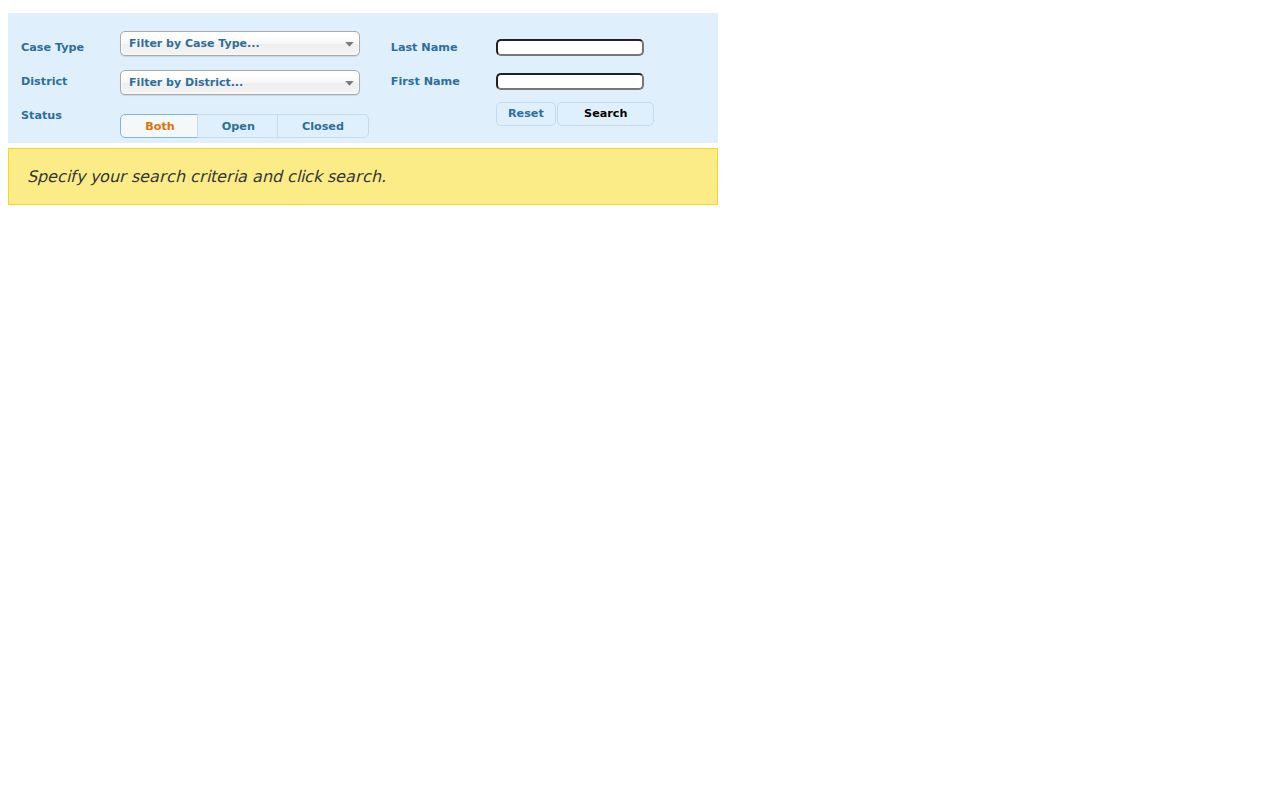
The probate result is only a starting index. The district controls access to the file, correspondence, and any certified copy request.
Enfield Vital Records for a Resident Lookup
Vital records prove events, not current residency. A birth, marriage, or death certificate confirms that something happened in Enfield. But no vital file works as a resident list. The Connecticut Department of Public Health holds statewide records dating from July 1, 1897. It offers both town and state request routes. Birth records stay closed for 100 years under CGS §7-51. Identity, relationship, and representative rules govern access before that mark. Adults 18 and older can generally order a certified marriage or death copy. Social Security numbers, adoption details, parentage, surrogacy facts, and similar protected fields remain off limits.
Enfield charges $20 for a town-certified copy. A local marriage license costs $50. Appointments are required. Same-day slots are not offered, and each license stays valid for 65 days. Certified marriage copies open up 48 hours after the officiant returns the license. Death-copy instructions include a waiver route for veterans. A decedent's Social Security number goes only to a spouse or next of kin. State processing can stretch to 12 weeks. Requests move by mail, in person, or through approved VitalChek. ID and payment rules differ by route.
Pre-1897 events call for library and State Archives indexes, newspapers, cemetery files, and church records. An index entry or obituary can point the way. Only the lawful custodian can issue the certified copy itself. The Enfield vital-records and marriage-license page is the local starting point. It covers forms, appointments, fees, and identification rules.
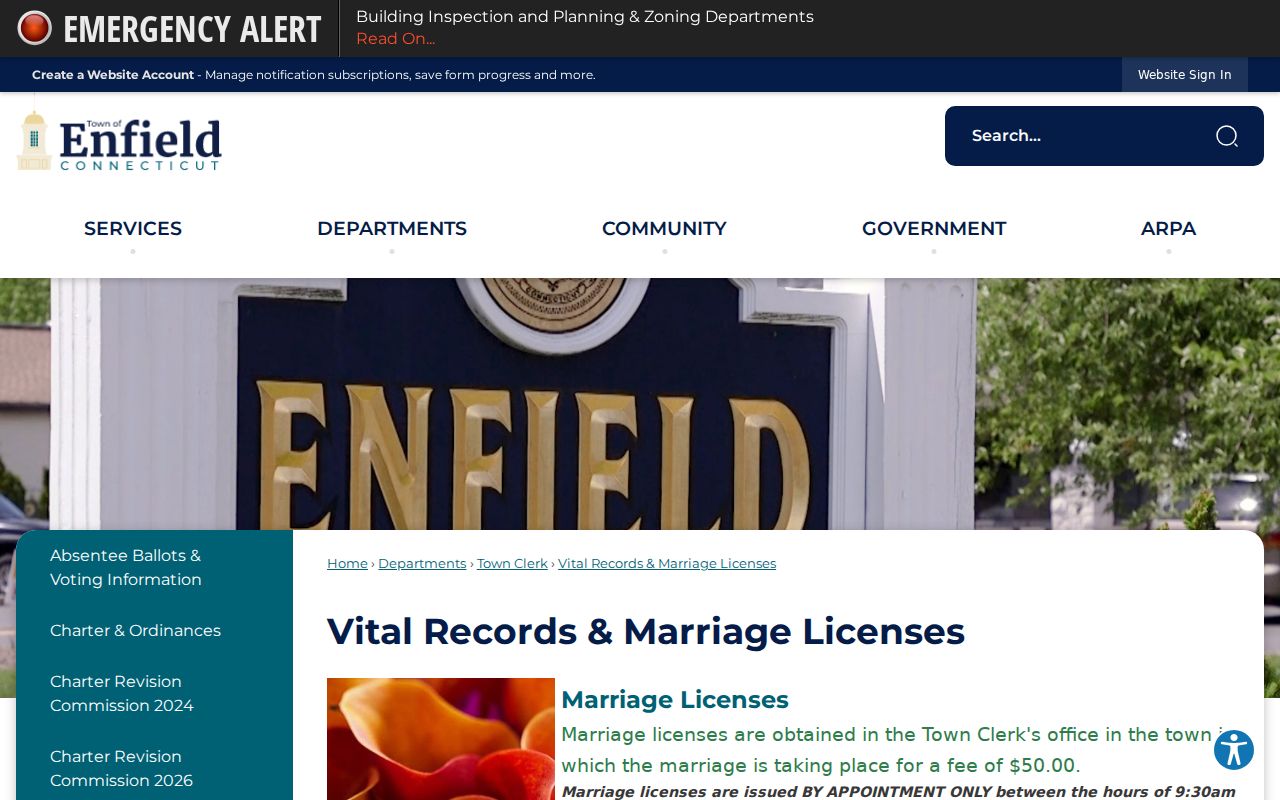
The local forms want event details. They also ask for the requester's relationship or purpose, and that paper trail turns a name match into proof rather than a search result.
Verify One Enfield Resident
Start with a simple question. Do these records all belong to one Enfield person? Keep the address route and the name route separate. For an address-first search, the Enfield street directory can open the path to a parcel and its deed. A name-first lookup should lean on a date, a role, or an event before it ties a person to a place. Use that order for any current-identity check, and note the source date beside every result.
- Write the exact name, middle initial, former name, known date range, and expected record role.
- Search Vision by owner name when an address is part of the question. Record the card date, parcel, situs address, and mailing field separately.
- Compare the parcel with the Town Clerk land-record index. Search the person as both grantor and grantee, then read the instrument instead of assigning an address from an index line.
- Run the GA 13 court searches and the civil or probate route with the matching name variants. Keep the docket, case type, role, court, and date together.
- Use a vital-record index or eligible certified copy to test an event, spouse, parent, or death detail. Do not request a restricted birth record as a shortcut around the access rule.
- Accept the match only when two independent records connect the same name to the same time and place. If the sources disagree, ask the custodian rather than merging them.
- Docket
- A docket is the court's numbered case register. It organizes parties, filings, events, dates, and status, but an online docket view is not automatically the official file.
- Index versus image
- An index is a searchable list of fields. An image is a scan of an instrument, filing, or certificate page. The image may require a login, payment, clerk access, or a separate request.
- Certified copy
- A certified copy is issued or attested by the record custodian. It carries a certification statement and is different from a screen print, index line, newspaper notice, or ordinary scan.
Enfield Voter Lookup Limits
Connecticut's public voter lookup answers registration questions. It is not a residence tool. The lookup requires one criterion from among Last Name, Voter ID, Street Name, or DMV ID. First name and birth date only narrow results. A failed load or a no-result screen proves nothing about Enfield residency. The live portal may also ask a visitor to clear a security check before searching.
Public voter fields can carry a name, former name, residence or former address, voting district, party affiliation, application or status, and participation history. Ballot choices stay private. Election history refreshes within 60 days after an election or primary. CGS §§9-50a and 9-50b divide public from protected fields. Section 9-50d allows a safety-based name and address nondisclosure. Birth month and day are protected. Only the year remains public under the current rule.
The full voter file runs through a separate channel. It costs $300. Requests must state a certified election-related, scholarly, journalistic, political, or governmental purpose. The form bars personal searches, harassment, advertising, solicitation, sale, and marketing use, with a warning about penalties. Enfield registrars work at 820 Enfield Street. Tom Kienzler is listed at 860-253-6321, and Beth Jerez at 860-253-6322. Hours run Monday, Tuesday, Thursday, and Friday, 9:00 to 1:00, with Wednesday closed. For a historical precinct question, ask the Registrar, Town Clerk, or State Library for a date-specific record.
Business and License Clues in Enfield
A business filing is not a home address. It proves an entity connection instead. The Connecticut Business Registry search takes a business name, Business ALEI, or filing number. Results can show the business ID, principal, agent, formation date, entity type, street, city, state, ZIP, and annual-report document. Search the Secretary of the State business registry when a person is known through an entity or trade name, then read whether the address is a registered office or a service address.
Trade-name certificates from the Town Clerk add local names. Connecticut eLicense is the real-time credential route. Its selector and filters cover credential number, business or DBA, first and last name, address, city, state, ZIP, specialty, and practice city. The live list holds 434 credential types. Status and scope vary by board. A teacher, attorney, contractor, or health professional belongs in its own credential category. No single Enfield register covers every local occupation, permit, and license.
Treat each result as a public affiliation. It should answer a defined identity question. It cannot fill a gap in a residence record.
Enfield Family and Classmate Routes
Birth-parent questions in Enfield run through Connecticut's confidential adoption system rather than an open name search. Adult adoptees, former foster youth, birth parents, and birth relatives all get help from the Department of Children and Families Adoption Search Unit. It handles permitted information requests plus the Contact Preference and Reunion Registry. The DCF adoption-search forms and information page lists three key forms. DCF-3060 is for an adult adoptee request. DCF-3061 covers a genetic-parent contact preference. DCF-3062 handles an adoption search or reunion request. Timing matters here too. Adoptions since 1944 belong to the DCF Search Unit. Anything earlier routes through Probate Court instead.
An adopted person's original birth certificate stays confidential. A post-2021 route for uncertified copies exists, but it is narrow. Only the named adult adoptee, or an adult child or grandchild, may apply, with a $65 fee plus form and ID rules. Think of it as a consent program. It is not a public path to naming a birth parent. Follow the forms, and stop when a protected record or person appears.
A classmate search works differently. Local newspaper files, surviving yearbooks, the 1909 Yale People collection, school finding aids, historical-society holdings, and voluntary alumni channels are the right tools. Enfield's municipal directory lists staff and civic contacts, not alumni. No complete public Enfield yearbook index exists, so a dead end proves nothing about who once lived in town.
Enfield Resident Lookup Limits
Sometimes a blank result is by design. Connecticut's Address Confidentiality Program, commonly called Safe at Home, helps qualifying survivors. It gives them a substitute Hartford mailing address. First-class mail gets forwarded while the true residence stays out of ordinary public forms. Voter nondisclosure under CGS §9-50d is a separate shield. CGS §1-217 protects certain residential addresses too. The federal Driver's Privacy Protection Act, 18 USC §§2721 through 2725, blocks DMV address access. None of this can be sidestepped with a deed, assessor card, or voter record. No resident lookup in Enfield should treat those documents as a loophole.
Commercial data held by a covered controller falls under a different law. Connecticut's Data Privacy Act, CGS §§42-515 through 42-526, grants access, correction, deletion, portability, and opt-out rights. Those rights cover sale, targeted advertising, and profiling. The Connecticut Attorney General describes a 45-day response window and one free request per 12 months. It also notes recognition of Global Privacy Control from Jan. 1, 2025. Those rights stop at the edge of a town record. For a specific public record, use the Connecticut Freedom of Information request route. Name the record, date range, custodian, and format you want. No universal state form exists. State agencies may generally charge up to $0.25 per page, and municipalities up to $0.50. Exemptions and redactions stay intact.
FOI can get you an identified record. It cannot force an agency to rewrite its data. Ask about the correction process, and keep the original version and date.
- Send an assessment-card correction to the Assessor.
- Send a land, vital, index, map, or trade-name issue to the Town Clerk.
- Send voter status or registration questions to the Registrar or Secretary of the State.
- Send a docket or case-display correction to the court clerk.
- Send a business filing issue to the Secretary of the State.
- Send a credential question to the relevant eLicense board or custodian.
Lawful use. A public name match is not permission to stalk, harass, intimidate, dox, or repeatedly contact a person. Connecticut law prohibits stalking, harassment, and certain electronic disclosure of identifying information without a legitimate purpose. Use a record for a lawful personal research question, respect protected status, and rely on the custodian when a correction is needed.